
Conditions: space weather
The Conditions tab starts with today’s space weather: a dial with the Kp index and three numbers under it.
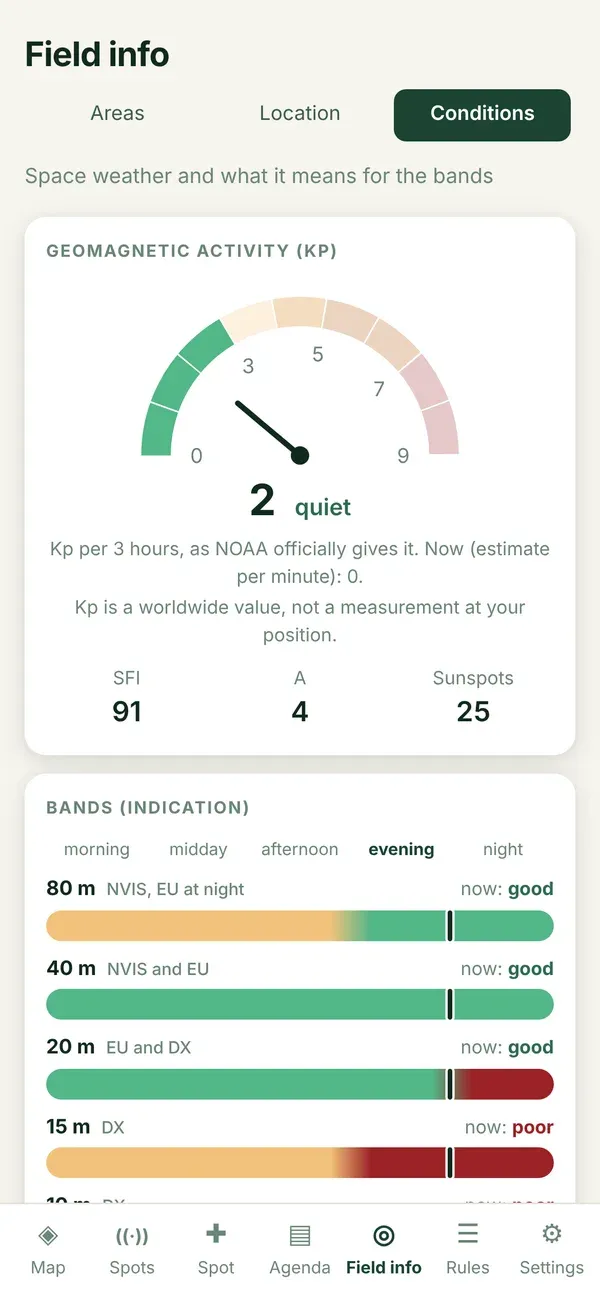
The Kp dial
Section titled “The Kp dial”Kp measures how restless the Earth’s magnetic field is, on a scale from 0 to 9. The lower, the better for the higher bands. Diana shows the official three-hourly value from NOAA, and next to it an estimate of the last minutes.
| Kp | Word in Diana | What it means |
|---|---|---|
| 0 to 2 | quiet | No effect. Normal conditions. |
| 3 | unsettled | Slightly restless. Usually no noticeable effect yet. |
| 4 | active | 20, 15 and 10 m drop one step. |
| 5 and 6 | storm G1, G2 | Minor storm: 20, 15 and 10 m worse. 80 and 40 m hardly notice it. |
| 7 to 9 | storm G3 to G5 | Strong storm: all bands worse, the high ones most. |
The three numbers
Section titled “The three numbers”| Number | What it tells you |
|---|---|
| SFI | Solar flux. The higher, the better the high bands open. Around 70 is low, above 150 is high. |
| A | How restless the magnetic field was over the whole day. Low is good. |
| Sunspots | Goes with the SFI: more sunspots, more chance of DX on the high bands. |
SFI, A and sunspots are daily figures; Diana says which day they are from.
How old are the figures?
Section titled “How old are the figures?”Under the dial it says when the figures were updated, for example “Updated at 14:37 (12 min ago)”. Diana tries to fetch them twice an hour, but in practice there can be a few hours between two updates.
- Older than eight hours: the message turns orange.
- Kp value older than twelve hours: Diana says so separately.
The source is NOAA SWPC. What it means per band: The band bars.